



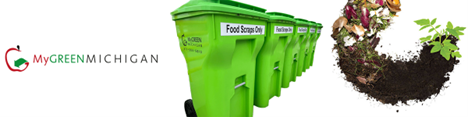
The Environmental Sustainability Committee has identified food waste diversion as an opportunity to reduce landfill impact and advance the City’s sustainability goals. As part of this effort, the Committee recommended a food scrap composting program in partnership with My Green Michigan.
In June 2026, the City of Novi officially launched the pilot residential Food Scrap Composting Drop-off Program. It is estimated that through this program, approximately 26 tons of food waste will be diverted from landfills each year.
How to Participate:
- Fill out this form (optional, but this helps us make the program better for you!).
- Know what materials can and cannot be disposed of (when in doubt, leave it out):
ACCEPTABLE COMPOSTABLE MATERIALS
- Fruits/Vegetables
- Dairy Products
- Tea bags/coffee grounds and filters
- Bread/Grains
- Napkins/Paper Towels
- Meats/Bones
- Grease
- Eggshells
- BPI Certified Products
NON-ACCEPTABLE MATERIALS - Glass
- Metal
- Plastic
- Condiment Packaging
- Bleached Towels/Napkins
- Pet Waste
Download MyGREEN Michigan’s Acceptable Composting Materials List
- Collect food scraps in a container of your choice (bucket, countertop bin).
- Bring food scraps to either drop-off location (Civic Center or MSU Tollgate Farm and Education Center).
- Take your empty container home, rinse, and repeat.
Locations & Hours:
You can bring your container of organic material to either of these locations and place your food scraps into the bright green, 64-gallon carts. The drop-off area and containers are marked with instructions.
Residential drop-off locations are open daily:
Novi Civic Center (24/7 unless otherwise noted)
45175 W 10 Mile Rd, Novi, MI 48375)
Download the Food Scrap - Civic Center Map
MSU Tollgate Farm and Education Center (dawn to dusk)
28115 Meadowbrook Rd, Novi, MI 48377
Download the Food Scrap - Tollgate Map
Please do not leave food waste outside/on top of the containers. The success of this program depends on community participation and a shared commitment to keeping drop-off areas clean.


Pilot Program Highlights:
- Pilot program to evaluate the feasibility, participation, and operational considerations of residential food scrap composting in Novi
- Drop-off model (not curbside collection), with My Green Michigan assisting in identifying and establishing appropriate collection locations.
- Four 64-gallon bins, collected weekly.
- Not-to-exceed cost of $10,000, with reimbursement through Recycling User Fee revenues and repayment to the Rubbish Fund.
- Supports the committee’s Resource Efficiency pillar by advancing waste diversion and sustainable materials management efforts
- Food waste will be transported to a licensed composting facility and processed into beneficial soil amendments.
Pilot Program Timeline:
- April 2026: Select Sites (four 64-gallon bins, collected weekly)
- May 2026: Prepare Sites
- June 2026: Start Compost Program
- November 2026: Evaluate Success
Estimated Annual Environmental Impact:
- Approximately 26 tons of food waste diverted from landfills each year. (Assuming 250lbs. of food waste collected per 64-gallon cart each week for one year. 250 lbs. × 4 carts × 52 weeks = 52,000 lbs. annually)
- Diverting food waste from landfill to composting avoids methane emissions, a potent greenhouse gas with a significantly higher climate impact than carbon dioxide.
- Actual diversion and emissions reductions will be measured, verified, and reported through My Green Michigan’s sustainability reporting platform.
To learn more about My GREEN Michigan visit: mygreenmi.com
Download the Food Scrap - Civic Center Map